Audionaut lets an assistant edit a multitrack session you can undo
A free, open-source audio editor for recording, arranging and agent-assisted timeline changes on desktop.
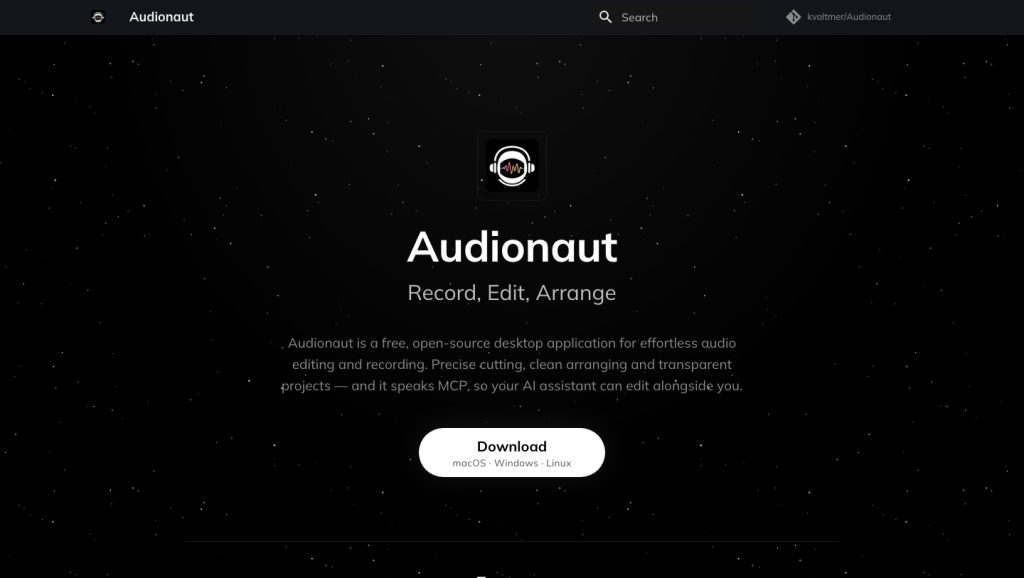
An audio editor can be simple until a recording becomes several takes, a handful of stems and a deadline. Audionaut aims for the middle ground between a quick waveform trimmer and a full digital audio workstation. It is a free desktop app for recording, cutting and arranging multitrack sound on macOS, Windows and Linux. Since August 2026 its source has been public under GPLv3. The feature that sets it apart for CoderHype readers is MCP access: an AI assistant can operate the same project a person has open, with each change arriving as a single undo step.
What an editing session looks like
A user can record a continuous take, punch in or capture a loop, then cut and arrange regions on a multitrack timeline. Each track has a playlist synchronized with its timeline, so named sections such as an intro or chorus can be rearranged without losing their relationship to the audio. Multichannel material stays grouped when cut; separate channels do not have to become a mess of unrelated clips. Audionaut supports hardware routing, clip gain, fades, markers and export to WAV, AIFF, FLAC, MP3 or Ogg Vorbis. For a podcaster or solo musician, that is enough to do substantial work without first learning an entire studio suite.
The product also offers analysis-based Auto Edit. It can find segment boundaries and beats, preview cuts and assemble a shorter arrangement. A time-stretch mode changes length while preserving pitch; a separate re-pitch mode behaves more like a tape-speed adjustment. Stem separation can make drums, bass, vocals and other material into four tracks using a model downloaded for local processing. These features offer useful starting points, but musical taste and artifact detection still need human ears. The site describes capabilities, not a measured success rate for every recording.
A conversation becomes an undoable edit
The MCP bridge lets an assistant inspect and modify a session using explicit tools: split a track, name a range, fade an entrance, assemble regions or export a result. Audionaut says that when the project is open in the app, a command runs against a copy of the live state and lands as one undo step without directly overwriting the saved project file. If a project is closed, the command-line path can read and write the file instead. That distinction matters: a conversational request should not silently destroy the only copy of a recording. The user can keep watching the session and decide when to save.
The published source is written in C++ using JUCE. The repository documents dependencies for analysis and stem separation rather than pretending those functions emerge from one small binary. Essentia provides audio analysis, while demucs.cpp and downloaded model weights support stem work. A developer building from source needs recursive submodules and, for some features, extra toolchains. An ordinary listener can use the provided app builds, but a contributor should expect a real multimedia software project rather than a one-file demo.
A shipped editor, with adoption still unproven
The official site dates the open-source release to August 15, 2026 and provides downloads and a detailed user manual. The public repository has ongoing commits, issue tracking and build instructions. Those are concrete signs of a maintained release; they are not a count of musicians or podcast producers using it. The sources reviewed provide no verified active-user figure, download total or revenue. The result worth reporting is that an audio editor with recording, multitrack arrangement and agent controls has reached public distribution and open development.
Audionaut is especially interesting for repetitive editing tasks, where saying 'split at bar 23 and fade the next eight bars' could save several precise mouse actions. It will be less compelling if a user's workflow depends on a deep plug-in ecosystem or specialized mastering tools. The honest evaluation is to try a representative session: import real audio, make a change through the interface and through an agent, undo both, and listen to the export. Its strongest design decision is keeping the assistant inside an inspectable, reversible editing workflow.
Sources: Audionaut features and user manual; GPL source and build documentation.
Project page screenshot captured by CoderHype on October 6, 2026 for this independent editorial listing.
CoderHype Score
A quick way to compare projects on CoderHype. Scores can change over time.
Log in to rate this project.
Is this your project?
We listed this project to help people discover it. If you made it, send us a claim and we can put it under your CoderHype account after checking your connection to the project.
More projects to explore
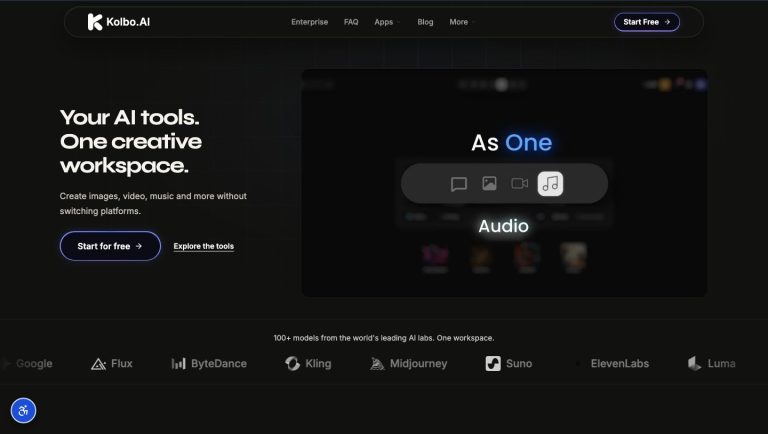
Kolbo.AI brings creative models into one production workspace
An AI creative workspace developed with Lovable, Cursor and Claude Code. TrustMRR showed $90,035 in trailing 30-day revenue on October 30, 2026.
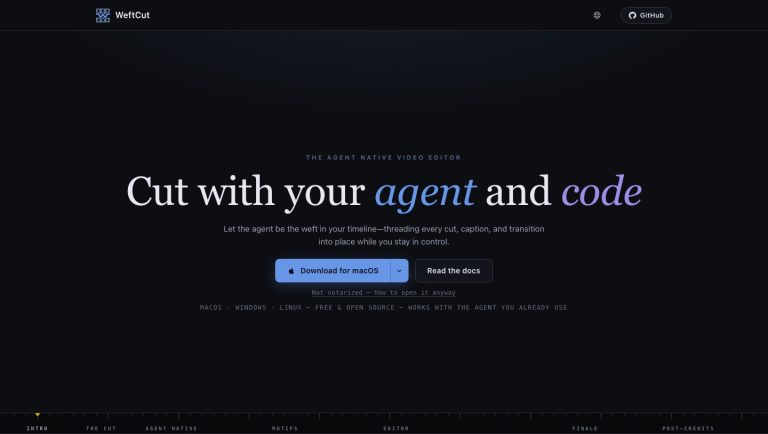
WeftCut puts a coding agent on a real video timeline
An open-source desktop video editor whose MCP tools let an external AI agent make visible, reversible edits.
TrackVis turns a finished song into a short promo video
A browser editor that pairs a musician's audio and artwork with motion for short social videos.