
OpenTakeoff turns a building plan into quantities you can audit
A browser-based, open-source construction takeoff tool for measuring PDF plans and reviewing material quantities.
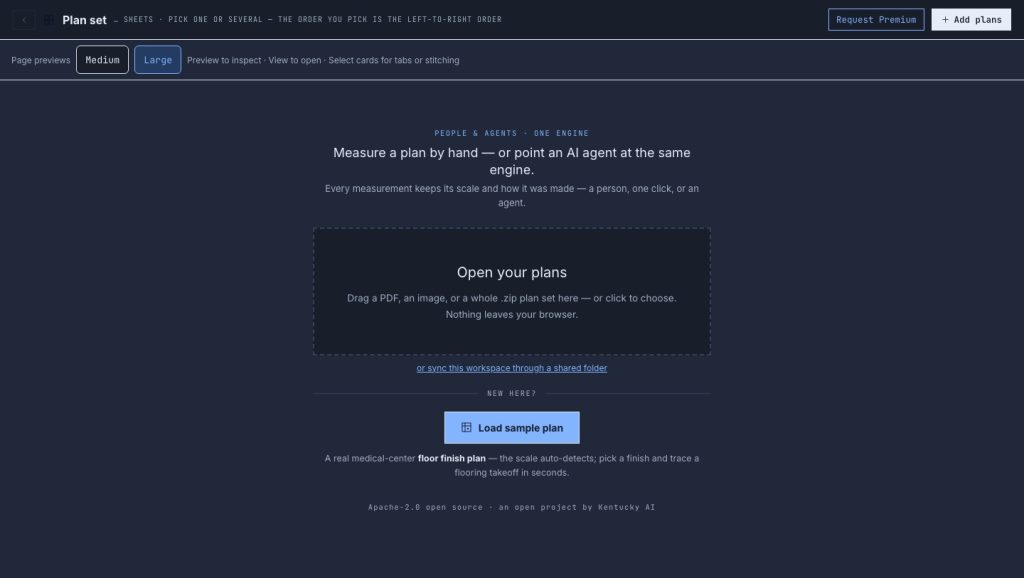
Before buying flooring or pricing a construction job, somebody has to turn a drawing into quantities: areas, lengths, counts and allowances for waste. That work is called a takeoff. OpenTakeoff makes the process visible on a browser canvas rather than hiding it in a spreadsheet. Load a PDF plan, confirm its scale, trace a room or run a symbol count, assign a material condition and inspect the resulting totals. The Apache-licensed project is developed by Kentucky AI, which says its creator works in commercial flooring estimation. It is aimed at estimators, but a careful renovation planner can understand the same workflow.
The scale has to be right before the total means anything
The tool records calibration per sheet and attaches geometry, measurement method and authorship to each measured shape. That provenance is not decoration. If a plan has been scanned at an odd size, the distance between two points may not match the printed scale. A takeoff that forgets that fact can produce a confident but wrong material order. OpenTakeoff lets a person calibrate and review the underlying marks, then separates measured area from waste-adjusted order quantity in the report. It supports area, linear and count measurements, deductions, multiple sheets, annotations and exported reports.
A contractor can export CSV, JSON, an Excel workbook or a marked-up PDF set to discuss a bid with somebody who does not use the app. The browser canvas can run locally without an account or upload, and the repository describes a static self-hosted build. The public demo includes a sample plan. That makes the product testable even if a user is not ready to put a live client drawing into a new tool.
An agent can measure, but its marks remain reviewable
OpenTakeoff publishes an MCP server with tools for agents to work against the same measurement model as the human canvas. The repository says agent-created measurements carry an explicit review status. It also describes reconciliation rules when sheets disagree on scale. That is a meaningful choice for construction: an assistant can accelerate repetitive tracing or counting, but a person must verify the takeoff before it becomes a purchase order or price. The project is careful to distinguish the open measuring engine from Kentucky AI's proprietary models trained on its own historical estimating archive. The free tool should not be described as a free copy of that private model.
One advertised convenience is temporarily unavailable. The project's October documentation says One-Click Area is gated while its flood-fill room detection is revalidated against a broader plan corpus. Manual Area tracing and the other measurement tools remain available. This is a concrete limitation to know before relying on a demo that shows automatic room boundaries. There is also a Premium workspace mentioned in the interface, while the core Apache-licensed canvas remains usable without a seat license.
What it has achieved
The live canvas, detailed user manual, public repository and working exports are evidence of a released tool. The GitHub project had 161 stars and 67 forks when reviewed, showing developer interest, although those figures say nothing precise about professional adoption. The sources reviewed do not disclose an audited count of bids completed through the app or revenue from it. The practical result is an inspectable takeoff workflow that can produce a material list from a plan without first buying estimating software. For any real job, verify sheet scale, deductions, waste assumptions and prices against the current drawings and supplier quotes before treating a total as final.
Sources: OpenTakeoff live canvas; repository, limitations and user guide.
Project page screenshot captured by CoderHype on October 6, 2026 for this independent editorial listing.
CoderHype Score
A quick way to compare projects on CoderHype. Scores can change over time.
Log in to rate this project.
Is this your project?
We listed this project to help people discover it. If you made it, send us a claim and we can put it under your CoderHype account after checking your connection to the project.
More projects to explore

Virtual Staging
Furnish empty rental photos in minutes, with CG disclosure built in.
Drywall Planner
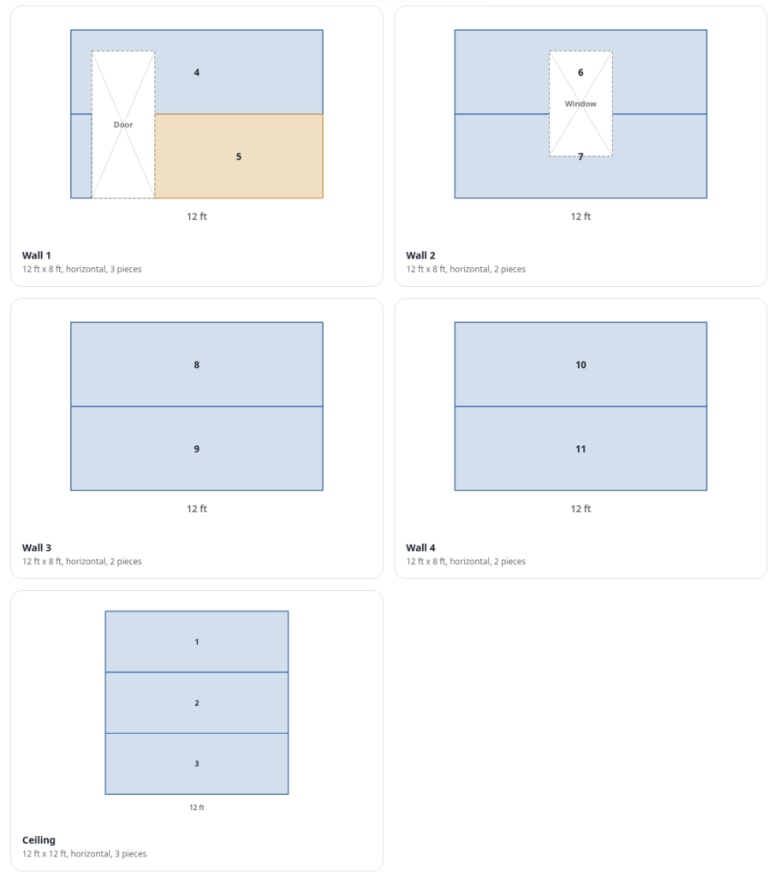
Free drywall calculator with a sheet-by-sheet layout planner that reuses offcuts for DIYers and contractors.
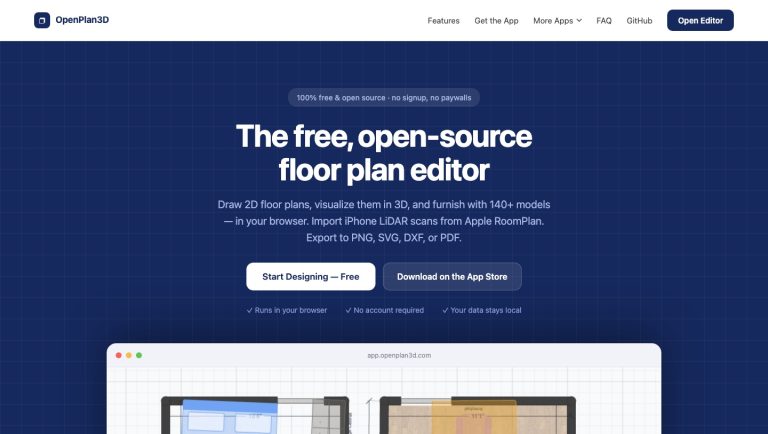
OpenPlan3D makes a home plan editable without an account
A free, open-source floor-plan editor with 2D drawing, 3D furnishing and local browser work.