5 Vibe-Coded Startups That Raised Funding

A prompt can produce a convincing app in an afternoon. It cannot produce a customer who will pay, a distribution channel, or an investor who believes the business can grow. That gap is the interesting part of the vibe-coding story. These five startups crossed it in very different ways: one began with eight letters of intent, another with a seven-figure enterprise deal, and one turned an urgent social problem into a fast-growing consumer product.
We use “vibe-coded” broadly but precisely: AI-assisted app builders played a documented role in creating the first prototype or the product itself. That does not mean every production system was generated by AI. The figures below are the latest public figures we found as of October 2026; where a number comes from a founder or platform rather than audited accounts, we say so.
Peec AI had eight letters of intent before production code
In late 2024, Marius Meiners was testing startup ideas at Antler in Berlin. ChatGPT had just added search, and he saw a new problem for marketers: brands had no clear way to see whether, or how, AI assistants recommended them. His answer became Peec AI, a platform that monitors brand visibility across tools such as ChatGPT, Perplexity, and Gemini.
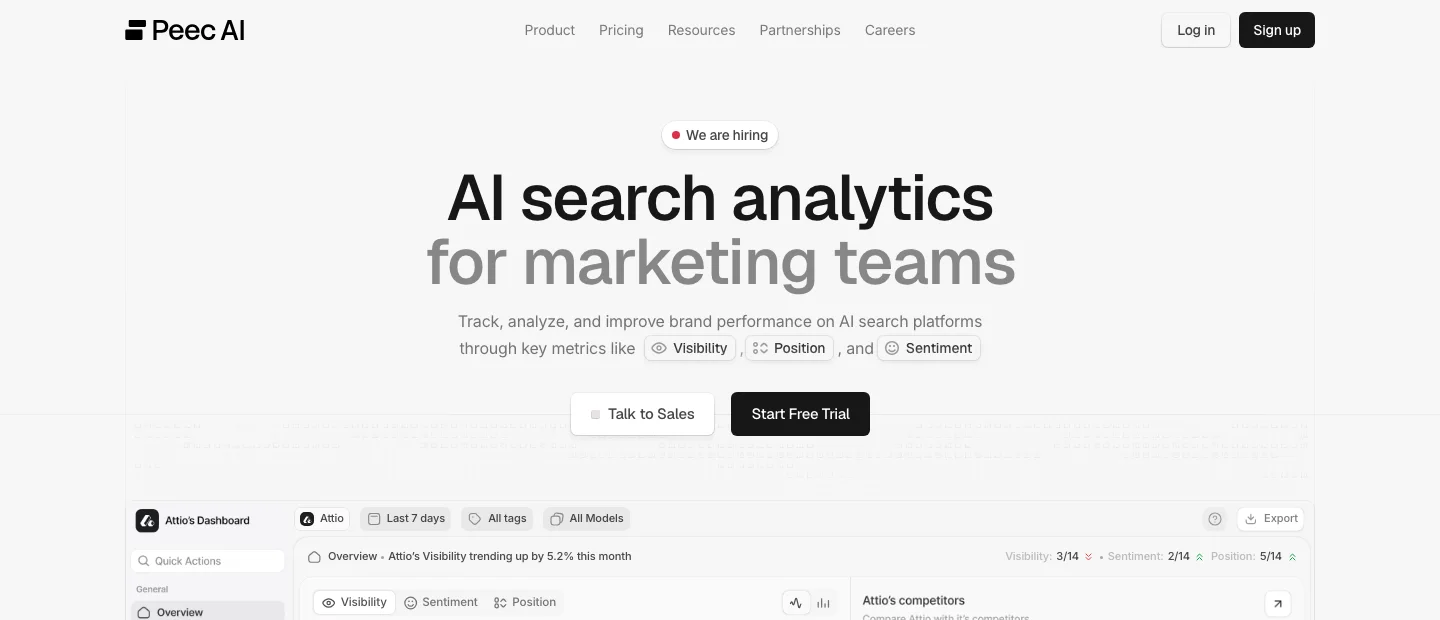
Meiners says he used Vercel’s v0 to build a first prototype in about a day and a half. Instead of treating the demo as proof, he showed it to prospective buyers and asked for commitments. Eight signed letters of intent. Antler then invested €100,000. Co-founders Daniel Drabo and Tobias Siwonia joined, and the technical team built the actual product in roughly six weeks before its February 2025 launch. Meiners describes the sequence in a founder interview.
The commercial choice was as important as the prototype. Rather than start with expensive enterprise contracts, Peec priced its entry product at about €85 a month to reach smaller marketing teams. In July 2025, 20VC led an $8 million seed round. In November, Singular led a $21 million Series A, bringing reported funding to $29 million. At that point, Peec reported more than 1,300 brand and agency customers, over $4 million in annual recurring revenue (ARR), and more than 300 new customers per month. In a later interview, Meiners put the business at more than 2,000 customers and $8.6 million ARR. Those are company-reported run-rate figures, not independently audited revenue.
The v0 screen did its job when buyers signed on. It was a way to find out whether anyone wanted Peec, not the infrastructure the company would later scale. By the time the larger rounds arrived, there was also a live product and a growing base of paying customers.
Roadrunner turned a weekend demo into an enterprise contract
Roadrunner tackles a less glamorous problem: the software that turns a complex B2B sale into an approved quote. Traditional configure-price-quote systems can struggle with a mix of seats, usage, custom terms, and approval rules. Roadrunner’s proposed workflow lets a salesperson describe the deal in natural language, then uses AI to help generate and approve the quote.
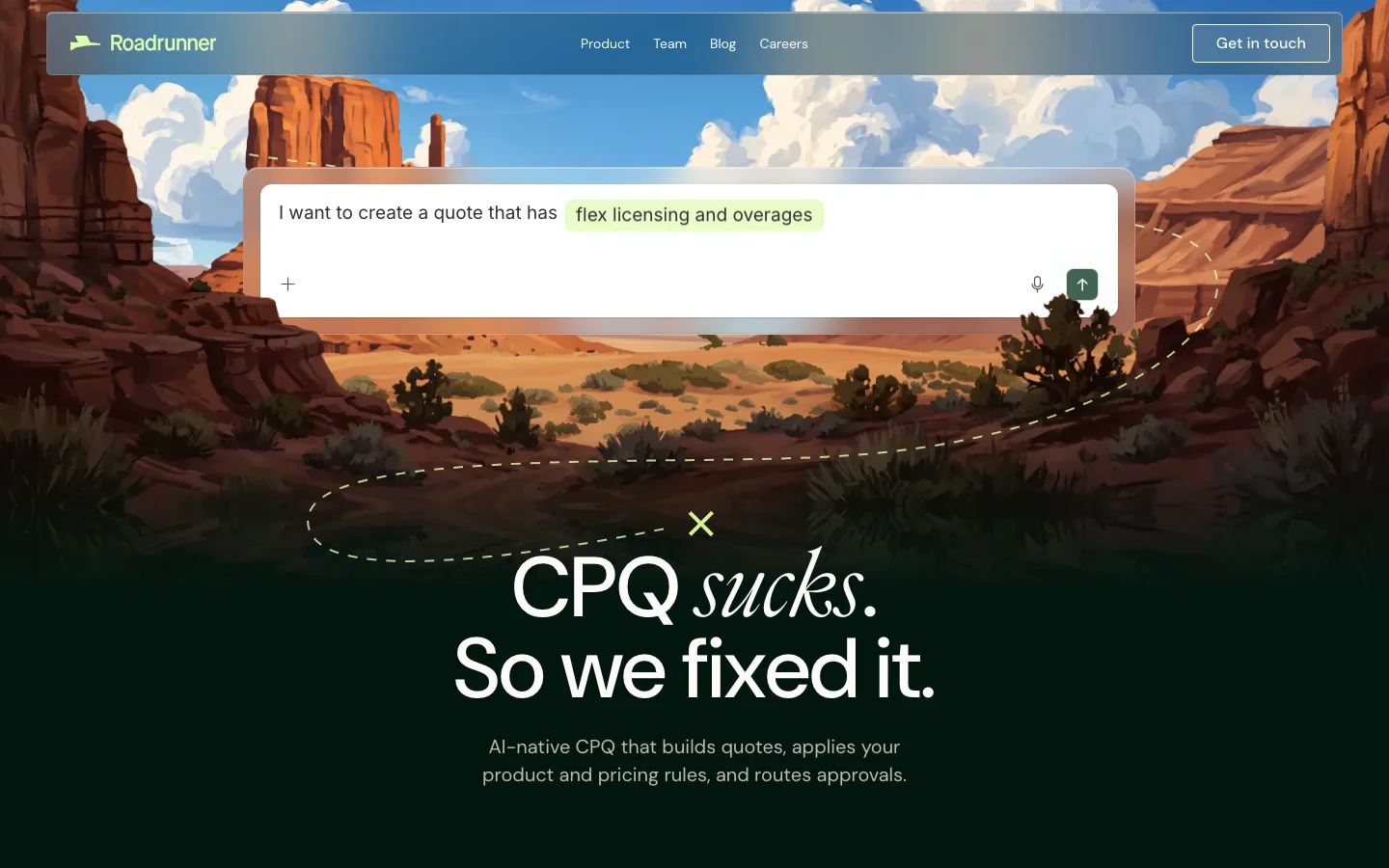
Co-founder Joubin Mirzadegan was a partner at Kleiner Perkins when he made the first demo. Kleiner partner Mamoon Hamid told Fortune that Mirzadegan had “vibe-coded this over the weekend” before showing him the concept. Mirzadegan founded Roadrunner in 2025 with Ajay Natarajan and Eugene Shao. Early conversations with chief revenue officers revealed a willingness to buy if the team could build it. According to Hamid, Roadrunner closed its first seven-figure deal within three months of the prototype.
The company later disclosed $27 million in total financing: a seed round led by Kleiner Perkins and a Series A led by Founders Fund, whose partner Trae Stephens joined the board. Fortune did not report a public customer count or ARR figure. The documented result is the first large contract and the funding, rather than a claim of broad market adoption.
That first contract says more about Roadrunner’s prospects than the weekend demo does. There is also an unusual advantage in this story: Mirzadegan was already a partner at Kleiner Perkins, the firm that led the seed round. His path to $27 million is hardly a blueprint for a founder without those connections. The public reporting tells us the original concept was vibe-coded; it does not say the finished platform was.
Brickwise began with 130 properties’ worth of frustration
Before Brickwise, Ismail Jeilani had helped oversee 130 properties. The recurring frustration was maintenance: tenants report a problem, property managers chase contractors, and everyone waits for updates. Jeilani and co-founder Elias Kassell built an AI property manager that can take calls and messages around the clock, coordinate repairs, and keep the people involved informed. Their Y Combinator profile traces the idea to that firsthand operating experience.
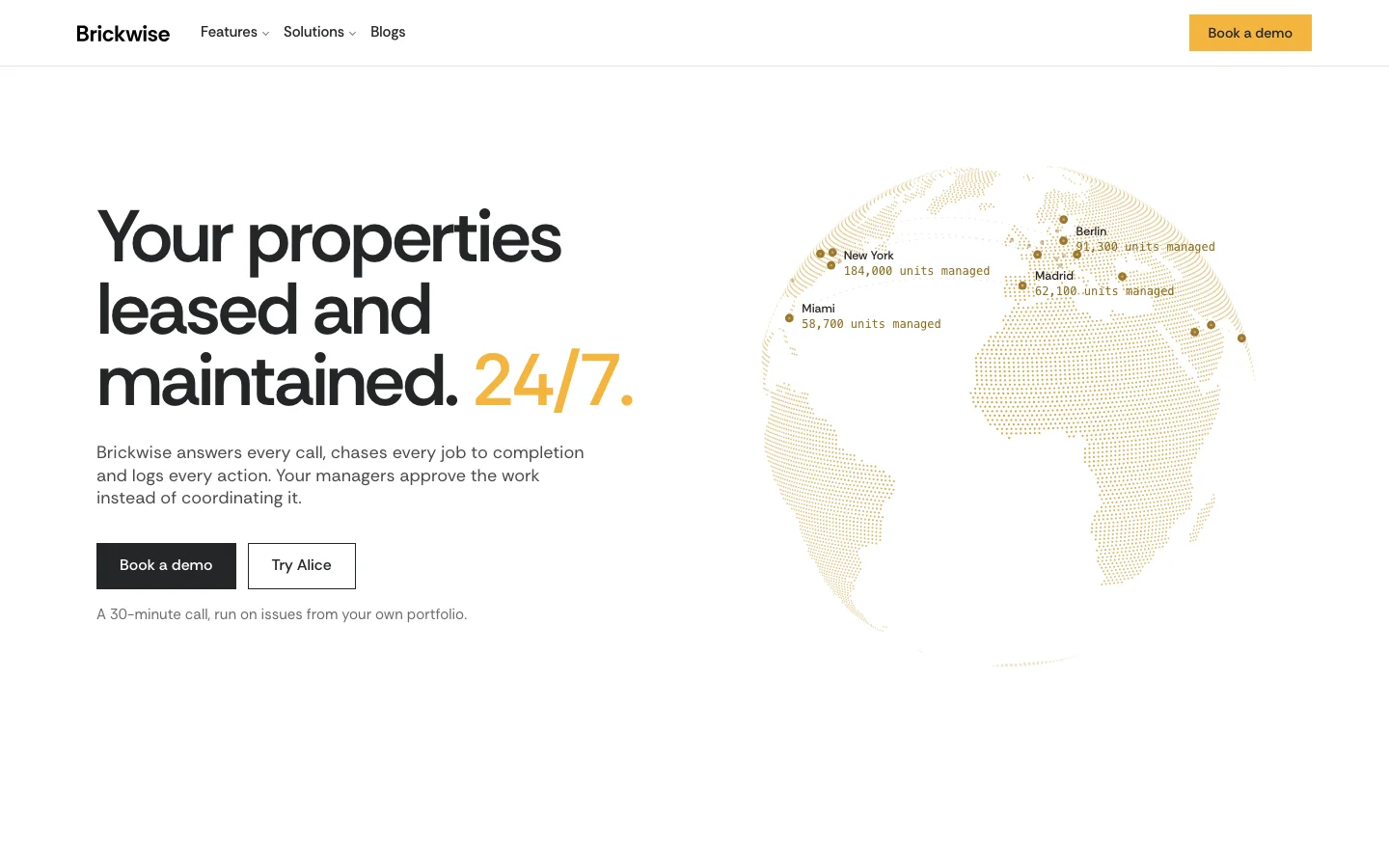
Lovable identifies Brickwise as a startup built on its AI app-building platform. Brickwise joined Y Combinator’s Fall 2025 batch; a post from Jeilani says the team was accepted 48 hours after applying and received YC’s $500,000 investment. Its YC profile says the company later raised more than $3 million in total funding. The same profile reports more than ten customers internationally and an enterprise contract exceeding $1 million in contracted ARR in its sales pipeline. A pipeline item is not booked revenue, so it should not be counted as such.
Jeilani had lived the problem before trying to automate it. That experience, combined with a working product and early customers, gave Brickwise a more substantial story than “we built this with Lovable.” Public sources establish Lovable’s role and the funding, but they do not disclose the full list of investors or how much of today’s product remains AI-generated.
Lumoo grew beyond its first virtual try-on experiment
Swedish founders Henrik Skagerlind Fasth and Peter Thörngren knew the fashion industry from the inside. Between them, they had 25 years of retail and fashion experience. Henrik began experimenting with virtual clothing try-on using the early version of Lovable, then called GPT Engineer. The idea expanded into Lumoo: a platform for creating product imagery, virtual models, lookbooks, localized campaigns, and video from a shared workflow rather than a pile of separate tools. Lovable’s founder case study says the product was built on its platform and integrated with retail and ecommerce systems.
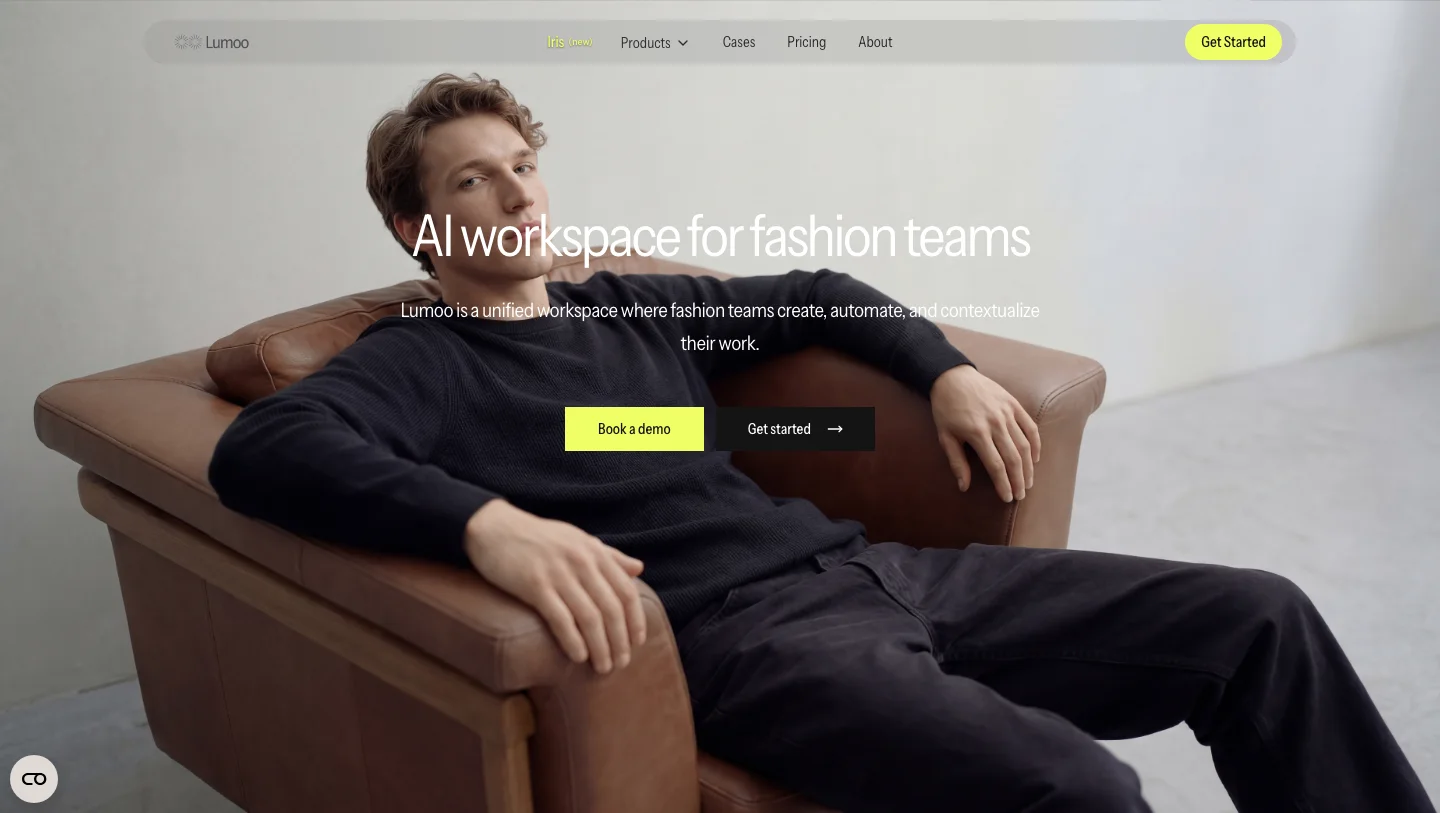
Lumoo launched in February 2025. In October of that year, Lovable reported more than 15 customer brands, including Gant and Brothers, and €700,000 ARR after nine months. Both metrics came from a promotional case study by the company whose software Lumoo used; they have not been independently audited. The €1 million ARR figure mentioned in that case study was a target, not a reported result.
In December 2025, Tech.eu reported a SEK 6 million angel round, roughly €550,000 at the time. Investors included Lovable co-founder and CEO Anton Osika alongside fashion and technology angels. The capital was intended for product development, hiring, and expansion. Henrik had already said the team brought in an engineer to strengthen backend scaling—a useful reminder that AI-assisted building and conventional engineering can coexist.
Virtual try-on was the starting point, but Lumoo raised money around a broader workflow that fashion brands were already using. The founders’ industry relationships and reported recurring revenue made the case more concrete. It is one of the examples here where an AI-built product appears to have gone well beyond a pitch screen, although the detailed build and revenue account comes from Lovable’s own promotional story.
Plinq found an audience before its first round
In Brazil, marketer Sabrine Matos was shaken by a femicide case in which a woman reportedly did not know about her former partner’s history of domestic-violence proceedings. Matos created Plinq to make relevant public court and official-record information easier for women to find before dating someone. She did not come from a software-engineering background. Using Lovable, she assembled the first web version in 45 days; both Lovable’s account and Brazilian startup outlet Startups describe that build.
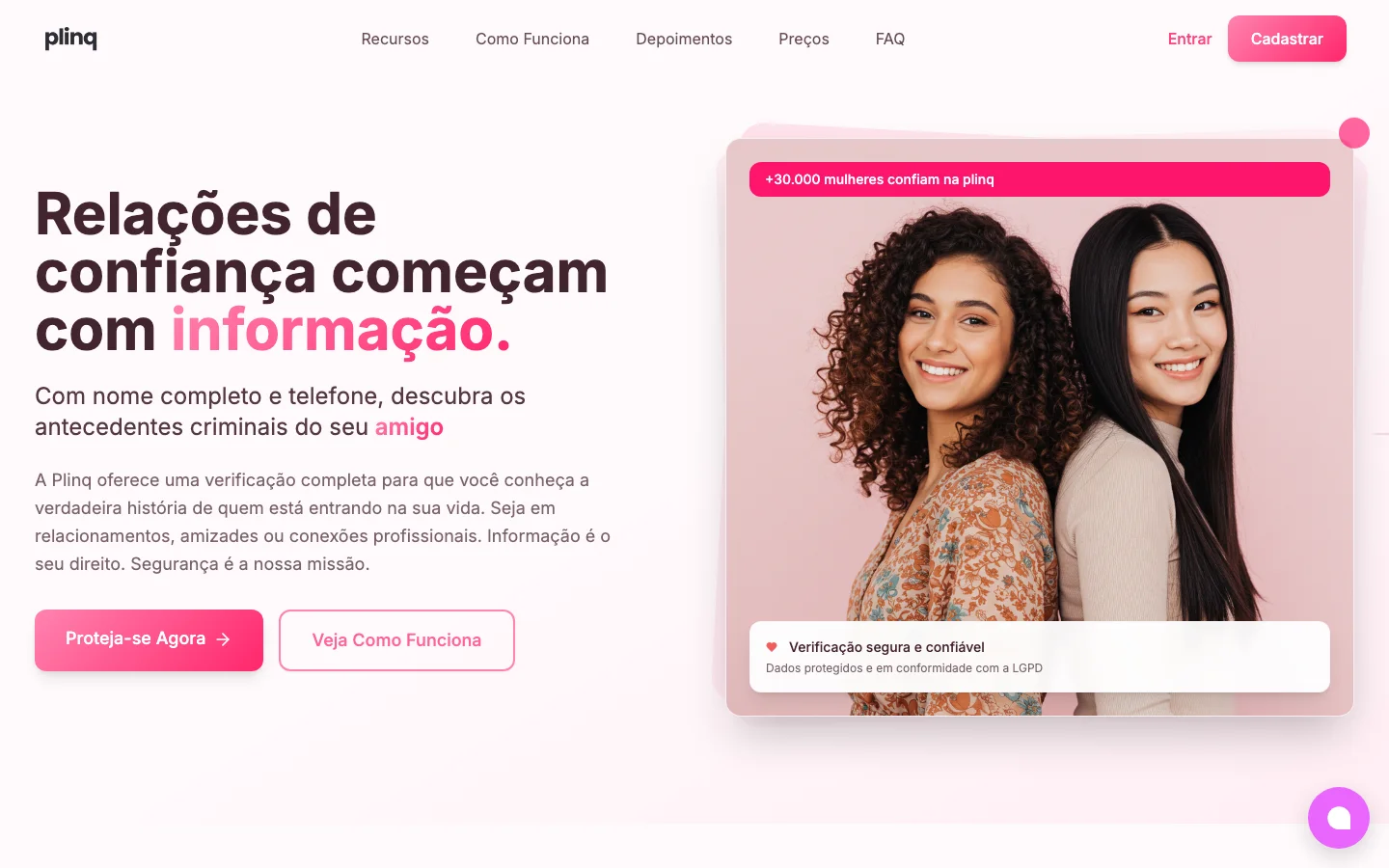
The site launched in June 2025. Startups reported 3,000 sign-ups on day one, about 10,000 in the first two months, and more than 60,000 users with nearly 85,000 searches after a year. In August 2026, it reported Plinq’s first investment round: R$1.3 million led by Spectra Investments, with angel investors including Lovable CEO Anton Osika. The money was earmarked for a mobile app and team development. An angel investor quoted by Startups pointed to the urgency of the problem and the team’s ability to reach users through community and word of mouth.
There is a numerical trap in this story. A Lovable case study labels R$2.2 million as ARR, but an earlier interview in Exame called the same amount projected first-year revenue. We cannot verify that Plinq earned it, so we are not presenting it as achieved revenue. Nor can a search of public records guarantee someone’s safety; the product organizes available information, which has practical and legal limits.
The 45-day build got Plinq in front of users. Community sharing carried it further, and the reported usage gave Matos a reason to build the next version as a mobile app. The investment came after those signs of demand, not simply because the first site had been made with an AI tool.
The code was fast. The proof took longer.
The funding amounts are strikingly different—Peec reported $29 million in total, Roadrunner $27 million, Brickwise more than $3 million, Lumoo SEK 6 million, and Plinq R$1.3 million—but the useful pattern is not “type a prompt, get a term sheet.” The founders used AI-assisted building to shorten the distance between an idea and something customers could react to. What followed was harder to automate: Peec got letters of intent, Roadrunner landed a major buyer, Brickwise brought domain experience and clients, Lumoo sold into fashion brands, and Plinq earned an audience.
If you are building your own project, the question to borrow from these stories is not how quickly you can generate an interface. It is what you can learn once a real person uses it—and what evidence you can show when you ask someone else to back the next step.