
WeftCut puts a coding agent on a real video timeline
An open-source desktop video editor whose MCP tools let an external AI agent make visible, reversible edits.
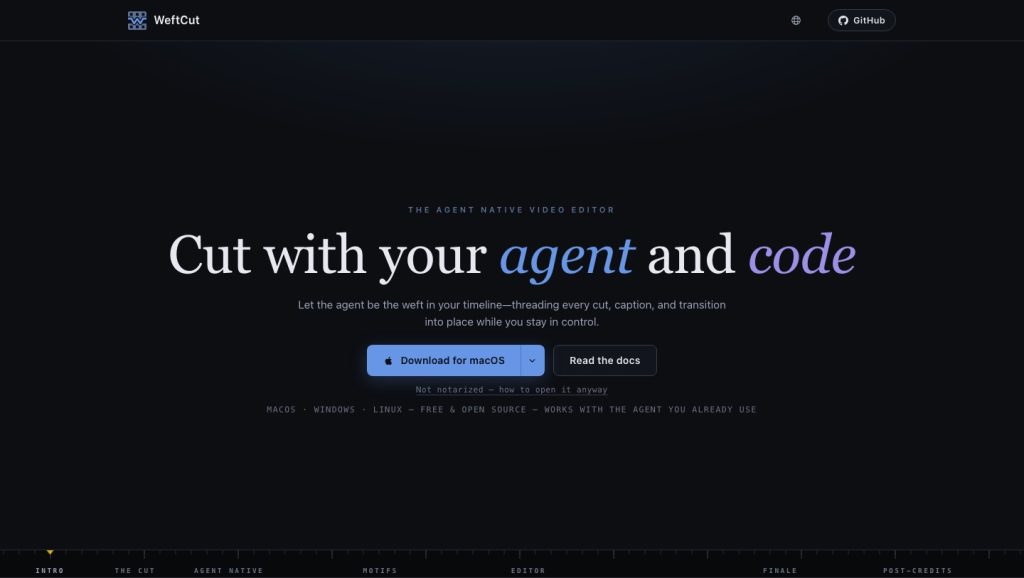
Most AI video features sit beside the edit: ask for a caption, generate a clip, or suggest a cut. WeftCut starts from a harder question. What if an agent could use the same timeline controls as the person editing, while the person watched every change arrive? The free desktop editor exposes its operations through a local MCP server. A connected Codex, Claude, Cursor or other MCP client can place, trim, split, caption and mix clips in a project that remains open on screen.
A timeline, not a prompt box
The app has the familiar parts of a nonlinear editor: playback, trimming, keyframes, effect chains, captions, markers, audio work and export. When an agent acts, its changes appear on the timeline with a change feed and checkpoint controls. The editor's public demonstration pairs a full session recording with a line-by-line trace, so viewers can see which actions produced the cut. This design addresses a real trust problem. A vague request to 'make the interview tighter' is easier to evaluate if the resulting deleted pauses and moved clips are visible and undoable.
WeftCut also has Motifs, reusable motion elements written as code. An agent that can write a small web scene can turn a requested title, illustration or animation into an editable piece of the video. That is a more interesting use of a coding model than choosing from a fixed template library. The site shows examples, but a prospective user should try the rendering and export path on their own footage. Public demos show what is possible in a controlled case; they do not establish average edit quality across different genres or agents.
The intelligence lives outside the app
WeftCut bundles no general AI model. The developer connects an existing MCP client; optional speech and vision tools can run locally after download or use a separately configured cloud provider. The editing and export pipeline stays on the user's machine, while any data sent to a connected cloud model depends on that model's setup. Its repository describes a Rust-based native core, a desktop interface and FFmpeg components with separate license obligations. The app itself is MIT licensed. The creator, known as UncleChair, says they built it to speed up their own video work, especially repetitive timeline moves and overlays that were easier to code than search for.
Ready-made builds are linked for Windows, Apple Silicon macOS and x86-64 Linux. The repository also warns that the macOS installer is not yet verified, so Apple's security flow may require manual approval. This is a practical early-stage limitation, not a reason to call the editor nonexistent. The public GitHub repository showed 56 stars and 15 forks when reviewed, while the project explicitly said it remained under active development before version 1.0. No audited count of finished videos, active editors or revenue is provided.
Who might actually benefit
The strongest use case is a creator making repeated formats: a series of interviews, product demos, tutorials or social cuts where the same captions, pauses and visual treatments recur. An agent can take mechanical work off the timeline while a person judges pacing and tone. A beginner still needs to understand the consequences of an edit; a professional still needs predictable exports and a way to recover from mistakes. WeftCut's value will depend less on whether a model can issue a command than on whether the human can verify and refine the result quickly. Its current release gives that hypothesis a tangible editor, documentation and a public trace to examine.
Sources: WeftCut official site and full-session demo; repository, releases and maintainer notes.
Project page screenshot captured by CoderHype on October 6, 2026 for this independent editorial listing.
CoderHype Score
A quick way to compare projects on CoderHype. Scores can change over time.
Log in to rate this project.
Is this your project?
We listed this project to help people discover it. If you made it, send us a claim and we can put it under your CoderHype account after checking your connection to the project.
More projects to explore
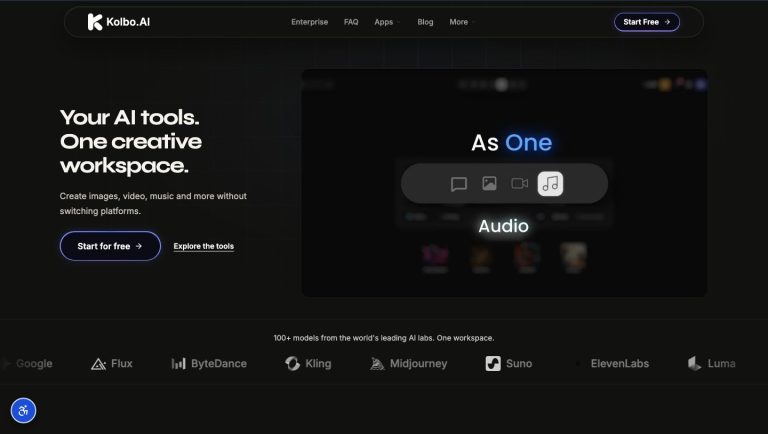
Kolbo.AI brings creative models into one production workspace
An AI creative workspace developed with Lovable, Cursor and Claude Code. TrustMRR showed $90,035 in trailing 30-day revenue on October 30, 2026.
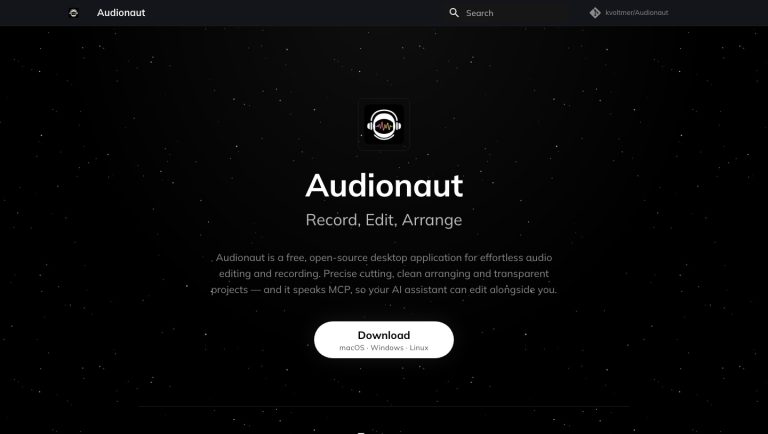
Audionaut lets an assistant edit a multitrack session you can undo
A free, open-source audio editor for recording, arranging and agent-assisted timeline changes on desktop.
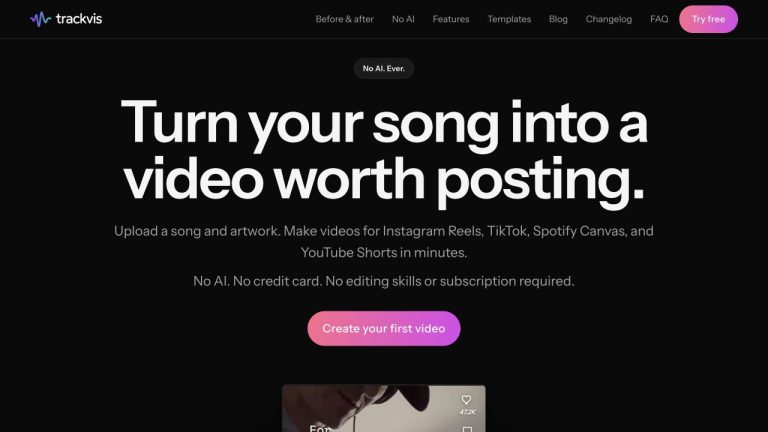
TrackVis turns a finished song into a short promo video
A browser editor that pairs a musician's audio and artwork with motion for short social videos.